
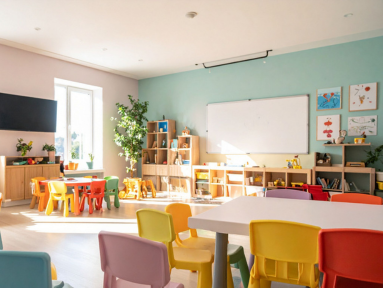
A teacher in Jumeirah noticed it first.
Not a smell. Not a sound. Just a feeling, the kind that settles over a classroom like a slow exhale. By 10:45 a.m., her Year 6 students, normally sharp and eager, had gone quiet. Not the focused kind of quiet. The heavy kind. Eyes glazing. Pencils drifting. Questions stopping.
She assumed it was the week before a big exam. Or the heat outside. Or just one of those mornings.
Three months later, the school installed indoor air quality sensors. When the facilities team pulled the first week of data, the answer was right there, timestamped and measurable. Every morning between 10:30 and 11:15 a.m., CO₂ levels climbed steadily as occupancy peaked and ventilation fell behind. Research consistently links elevated CO₂ in classrooms to reduced concentration and fatigue, and the data showed exactly that pattern, every single day.
It wasn’t exam nerves. It was the air.
Why Dubai Classrooms Are Especially Vulnerable
Dubai’s climate keeps buildings sealed for most of the year. That places the entire burden of air quality on HVAC systems, and when those systems aren’t calibrated for actual occupancy, indoor conditions shift in ways people feel before they can name.
A full classroom of 25 to 30 students generates significant CO₂ through breathing alone. Fine outdoor dust enters through foot traffic and HVAC intake points. Without continuous monitoring, these changes go unnoticed until they’ve already affected the room. That’s exactly what six months of IAQ monitoring in this Dubai school made visible.
What the Data Actually Showed
CO₂ Levels Were Spiking Every Morning: Unnoticed
During the first two teaching periods, CO₂ concentrations in several classrooms regularly climbed beyond 900 to 1,000 ppm as occupancy peaked. Not at dangerous levels but well within the range where cognitive performance begins to soften.
The fix was straightforward. Once the facilities team adjusted ventilation rates based on sensor data, CO₂ levels stabilised within days. The problem wasn’t the building; it was the absence of information. For practical steps that support improvements like this, these 6 approaches to better indoor air quality are worth reviewing alongside any monitoring programme.
Every Time Students Came Back from Recess, Particulate Levels Jumped
Each time students returned from outdoor play, PM10 levels rose as dust carried on clothing and shoes entered the building. In Dubai’s environment, this is expected. What the data revealed was how long it took some classrooms to recover.
Rooms with well-maintained filters returned to normal quickly. Rooms with older, under-serviced HVAC filters stayed elevated well into the next lesson, meaning students were sitting in degraded air conditions without anyone realising it. The data made a direct case for maintenance tied to actual building conditions, not a fixed calendar. A continuous monitoring approach makes this kind of responsive management possible.
One-Off Testing Wouldn’t Have Caught Any of This
A single IAQ test gives a snapshot of one day, one moment. The patterns above only became visible through continuous monitoring over weeks and months. Buildings change. Occupancy shifts. HVAC systems age. Ongoing monitoring captures what a one-off assessment never can.
Ready to See What’s Really Happening in Your Classrooms?
Most schools in Dubai don’t know there’s an air quality issue until students and teachers are already feeling it. By then, it’s been quietly affecting learning conditions for far longer than anyone realised.
Envida works with schools across the UAE to implement indoor air quality monitoring solutions built for Dubai schools, giving facilities teams the data to act early, not after the fact.
Book an IAQ Assessment for Your School
Healthy classrooms begin with accurate information. Let the data show you what you’ve been missing.
Frequently Asked Questions
1. What is IAQ monitoring, and why is it important for schools?
IAQ monitoring refers to the continuous measurement of indoor environmental conditions, including carbon dioxide (CO₂), particulate matter (PM2.5 and PM10), temperature, humidity, and volatile organic compounds (VOCs). In schools, it helps ensure classrooms remain comfortable, well-ventilated, and safe. Poor indoor air quality can affect concentration, comfort, and overall learning conditions.
2. How do indoor air quality sensors work in classrooms?
Indoor air quality sensors continuously measure environmental conditions and send data to a monitoring platform. Facility teams use this to identify ventilation issues, adjust HVAC systems, and maintain consistent indoor air conditions throughout the school day.
3. What IAQ levels are recommended for classrooms?
Commonly accepted benchmarks include CO₂ below 1,000 ppm during occupied hours, PM2.5 below 35 µg/m³ on a 24-hour average, and relative humidity between 30–60%.
4. How often should indoor air quality be monitored in schools?
Continuous monitoring is best practice. It allows schools to detect changes throughout the day and respond quickly, something periodic testing cannot reliably achieve.
5. Can IAQ monitoring improve classroom performance?
Monitoring data consistently suggests that stable, well-ventilated classrooms support better concentration and comfort. Students and teachers report fewer distractions when indoor air conditions are properly maintained.
6. What causes poor indoor air quality in Dubai schools?
Key factors include outdoor dust entering buildings, high classroom occupancy, limited natural ventilation during summer, and VOCs from cleaning products and building materials. IAQ sensors help identify these issues before they affect occupants.
7. Who provides IAQ monitoring services in Dubai?
Envida offers indoor air quality monitoring solutions, including sensor installation, data analysis, and IAQ assessments for schools and commercial buildings across Dubai and the UAE.
