
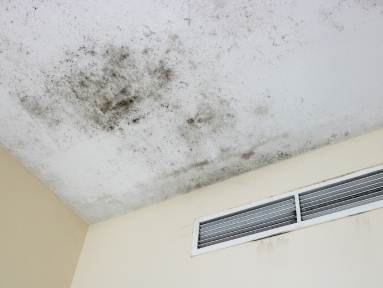
Two facility managers can receive the same mold finding and end up commissioning completely different remediation projects. The difference is usually classification. The species present, the extent of affected surface area, and the location of contamination relative to occupied spaces and HVAC infrastructure all determine what a proportionate professional response looks like.
The sections below explain the mold classification framework that governs professional assessment and remediation in commercial buildings in Dubai, aligned with IICRC S520 guidance. Understanding the classification framework before instructing a contractor produces better-scoped work and more defensible documentation.
Why Classification Must Precede Remediation
The most common error in commercial mold management in Dubai is proceeding to remediation without first establishing the scope and risk profile of the contamination. Surface-level cleaning of visible mold without understanding what is driving it frequently results in recurrence. IICRC S520 guidance, which Envida follows for all mold remediation services, establishes a classification system based on the extent of contamination. Knowing the category determines containment requirements, personnel qualifications, and the post-remediation verification standard. The EPA’s mold remediation guidance similarly requires that scope assessment precede remediation activity in commercial environments.
The IICRC S520 Classification Framework
Condition 1: Normal Fungal Ecology
An indoor environment in Condition 1 has fungal diversity consistent with or lower than outdoor reference samples. No elevated risk requiring remediation is present. In Dubai, maintaining Condition 1 requires active humidity control given the UAE’s external climate; it is not a passive default.
Condition 2: Settled Spore Contamination
Condition 2 describes elevated settled spore concentrations without an active growth source identified. This typically indicates that contamination from an existing or historic mold source has dispersed through HVAC infrastructure. Condition 2 findings warrant investigation to identify the source, followed by HVAC inspection and re-testing after any remediation.
Condition 3: Active Mold Growth
Condition 3 is confirmed active mold growth on surfaces. IICRC S520 distinguishes by affected area:
- Under 10 square feet: minimal containment protocols by qualified personnel.
- 10 to 100 square feet: limited containment, including polyethylene sheeting and controlled air movement.
- Above 100 square feet: full containment, negative air pressure, HEPA filtration, and qualified project management throughout.
In commercial buildings with shared HVAC infrastructure, the affected area calculation is not limited to what is visible. If contamination has entered ductwork or fan coil units, the affected area extends to the entire zone served by that infrastructure. Envida’s mold assessment process establishes the correct classification before any remediation work is instructed.
What a Professional Mold Assessment Involves
IAQ testing and verification is the starting point: air and surface sampling establishes spore concentrations, species present, and confirms whether visible discolouration represents active mold or a non-biological stain. The assessment must also include HVAC components; fan coil units, condensate drain systems, and supply and return air paths are the most common mechanism by which localised contamination becomes a distributed air quality problem.
The output is a written scope of works specifying affected areas, classification category, containment requirements, remediation method, and the post-remediation clearance standard. This document provides the basis for procuring remediation work and for verifying that the outcome meets the specified standard.
Moisture Source Identification
Mold growth has a moisture source. Identifying and rectifying it is a prerequisite for durable remediation. The most common sources in UAE commercial buildings are condensate drain blockage or overflow, evaporator coil condensation during high-humidity periods, facade or roof ingress from UAE rain events, and inadequate dehumidification during June to September.
Remediation that addresses visible contamination without resolving the moisture source will result in recurrence. Envida’s mold assessment and remediation process includes moisture source identification as part of the scope. ASHRAE Standard 62.1 guidance on moisture management in HVAC systems supports the principle that humidity control is a prerequisite for maintaining a Condition 1 indoor environment.
Post-Remediation Clearance Testing
Mold remediation is not complete until clearance testing confirms that the affected environment has returned to Condition 1. Clearance testing involves air and surface sampling by an independent assessor after remediation is complete, before containment is removed. Envida conducts post-remediation clearance testing through a DAC-accredited laboratory. All stages, from initial indoor air quality testing through to clearance verification, are documented and provided to the facilities manager as a complete project record.
Envida is a NADCA and IICRC-certified indoor air quality and mold remediation company with extensive experience across commercial buildings, healthcare facilities, hotels, and schools in Dubai and the UAE.
Need support with mold assessment, remediation, or post-remediation clearance testing?
📞 +971 4 361 7949
📧 admin@envida.ae
Available 24/7 across Dubai and the UAE
Frequently Asked Questions
What are the mold classification categories for commercial buildings in Dubai?
IICRC S520 classifies contamination into three conditions: Condition 1 (normal), Condition 2 (elevated settled spores without confirmed active growth), and Condition 3 (confirmed active growth, with sub-categories based on affected area). Each determines containment protocols and remediation approach.
Can in-house maintenance handle minor mold findings?
Small surface findings with a resolved moisture source can be addressed by qualified maintenance staff with appropriate PPE. Any finding involving HVAC components, structural materials, or an unconfirmed moisture source should be referred to a qualified assessor.
Does species matter for mold remediation in Dubai?
Yes. Aspergillus species can cause complications in immunocompromised individuals. Stachybotrys chartarum, associated with sustained water damage, produces mycotoxins requiring specific handling protocols. Remediation method is determined by assessment findings and aligned with IICRC S520.
Will Dubai Municipality require evidence of professional mold remediation?
Where mold is identified during an inspection, a documented remediation and clearance record is the primary evidence that the issue has been resolved to the required standard.
