
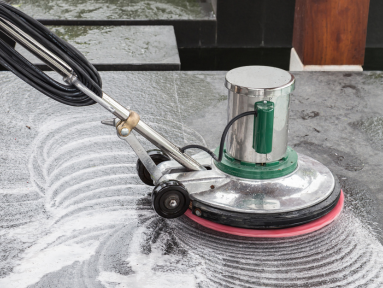
If you live in Dubai, you already know how quickly dust settles on every surface, especially floors. With air conditioning running for the majority of the year and humidity fluctuating between seasons, your flooring can become one of the biggest contributors to indoor dust levels, allergen load, and even mold growth.
Yet most homeowners focus on AC filters and surface cleaning routines while overlooking the connection between floor surface condition, HVAC performance, and the overall quality of the air their family breathes indoors.
Why Floors Directly Affect Indoor Air Quality in Dubai
In most Dubai apartments and villas, dust from desert sand, construction particles, pet dander, and outdoor pollutants settle first on the floor. When floor surfaces are scratched, porous, or damaged, these particles become trapped in micro-gaps and surface imperfections. Every footstep, every AC draft, and every piece of furniture movement pushes this settled dust back into the breathing zone, a process called dust resuspension that continuously degrades indoor air quality.
Common flooring conditions that worsen dust resuspension in Dubai homes include micro-cracked marble or terrazzo, worn tile surfaces, deteriorating grout, unsealed concrete in older units, and surface erosion caused by humidity cycling. These are not merely cosmetic issues; they directly affect the concentration of airborne particles and allergens in your home.
For households dealing with asthma, allergic rhinitis, or general respiratory sensitivity, the floor condition is a meaningful variable in overall indoor air quality management. The U.S. EPA identifies settled dust resuspension as a significant contributor to indoor particulate exposure.
Dubai’s Climate Increases Dust, Moisture, and Mold Risk
Dubai’s combination of high ambient humidity, persistent AC usage, and seasonal moisture events creates ideal conditions for allergen accumulation and mold growth at floor level. Areas near AC drain lines, balcony doors, bathrooms, kitchens, and ground floor rooms are particularly vulnerable. These zones hold moisture longer than expected, and when moisture meets organic dust material, mold colonisation can begin within 24 to 48 hours.
Mold growth at floor level around skirtings, under carpets, within floor gaps, and in grout lines is frequently overlooked because it develops out of sight. The mold spores it releases, however, circulate throughout the home via air movement and the AC system, affecting occupants in every room. The World Health Organization recognises airborne mold spore exposure as a significant public health concern, particularly for children and individuals with respiratory conditions.
This is why addressing floor-level moisture and dust accumulation is not a cosmetic matter; it is part of a broader indoor air quality strategy.
The Link Between Floor Condition, HVAC Performance, and IAQ
Floor-level dust and mold risk do not exist in isolation. It is directly connected to two of the most important systems affecting your home’s air quality: your HVAC system and your building’s moisture management.
AC duct systems distribute what settles on your floors. Dust that accumulates on floors is continuously picked up by return air grilles located at or near floor level and drawn into your AC system. Once inside the ductwork, this dust accumulates on internal surfaces, evaporator coils, and air handling components. Over time, it reduces system efficiency and becomes a reservoir of allergens, dust mite debris, and potentially mold that is then recirculated with every cooling cycle.
Professional AC duct cleaning conducted to NADCA ACR Standard removes this accumulated contamination from the system itself, but it works most effectively in combination with addressing the floor-level dust sources that continuously feed it.
Moisture at floor level is the primary driver of mold in UAE homes. AC condensate overflow, plumbing leaks under flooring, and moisture migration through ground-floor slabs are among the most common root causes of mold problems in Dubai apartments and villas. When moisture meets the organic material accumulated in floor cracks and grout, mold colonisation follows. Envida’s mold remediation service, conducted to the IICRC S520 Standard, addresses established mold at floor level and within wall cavities, identifying and treating the moisture source as well as the visible contamination.
Signs That Your Floor Is Contributing to Poor Indoor Air Quality
The following symptoms are common indicators that floor-level contamination is affecting your home’s air quality and warrant professional assessment:
- Dust returns quickly to floors within hours of cleaning, even with windows closed
- Family members experience more sneezing, coughing, or eye irritation indoors than outdoors
- A musty smell is noticeable near corners, skirtings, or areas adjacent to bathrooms and kitchens
- Visible discolouration, staining, or dark patches along grout lines or at wall-floor junctions
- Condensation or dampness visible on or near floor surfaces near AC units or exterior walls
- Symptoms improve noticeably when spending time outside the home
These signs suggest that dust resuspension and potentially active mold growth at floor level are contributing to the overall indoor air quality of your home and that an objective assessment is needed to understand the full picture.
Why Indoor Air Quality Testing Matters
Surface inspection alone cannot tell you what is circulating in your home’s air. Professional IAQ testing provides an instrument-based measurement of the actual airborne environment, including particulate matter (PM2.5 and PM10), mold spore concentrations, VOCs, CO₂, and humidity levels across different rooms and zones.
For Dubai homeowners concerned about dust and allergens at floor level, IAQ testing answers the questions that visual inspection cannot:
- Are particulate levels elevated, and in which rooms?
- Is mold active or dormant, and is it airborne?
- Is the AC system distributing floor-level contamination throughout the home?
- Is humidity being adequately controlled in high-risk zones?
- Has a remediation or cleaning intervention actually improved air quality?
This last point matters particularly. Envida conducts post-intervention IAQ testing to confirm measurable improvement following mold remediation, duct cleaning, or other services, giving homeowners documented evidence that the indoor environment is safer, rather than relying on visual reassurance alone.
Across Dubai communities, including Marina, JVC, Downtown, and Discovery Gardens, our team regularly identifies homes where floor-level dust and moisture issues are driving elevated particulate and mold spore readings that are not apparent from surface inspection alone.
An Integrated Approach to Home IAQ in Dubai
Addressing dust, allergens, and mold risk in a Dubai home effectively requires treating the indoor environment as an interconnected system rather than a collection of isolated surfaces and components. Envida’s residential IAQ services address each element of this system:
- AC Duct Cleaning removes accumulated dust and biological contamination from inside the HVAC system, stopping the recirculation of floor-level particles through your home’s air supply.
- Mold Remediation addresses active mold growth at floor level, within walls, and in ceiling voids, treating the source rather than the surface symptom, and following IICRC S520 protocol to verify clearance.
- IAQ Testing and Verification provides objective, instrument-based measurement of your home’s actual airborne environment before and after any intervention, so you know exactly what you are dealing with and whether it has been resolved.
- IAQ Monitoring powered by Sensgreen continuous sensor technology tracks humidity, particulates, CO₂, and VOCs in real time, giving you ongoing visibility of the conditions that drive dust and mold risk, and early warning when they deteriorate.
Practical Steps to Reduce Floor-Level Dust and Allergen Load
While professional assessment and remediation address the root causes, daily habits make a meaningful difference in maintaining a healthier home environment:
- Use a HEPA-filtered vacuum rather than sweeping, which resuspends fine particles into the air
- Place effective doormats at all entry points to capture outdoor dust, sand, and construction particles before they reach indoor floors
- Clean spills and moisture events immediately. Do not allow standing water near AC units, bathrooms, or exterior walls
- Keep AC filters clean and on schedule. A clogged filter reduces the system’s ability to capture particles drawn from floor level
- Avoid harsh chemical cleaning products that degrade floor surface integrity and introduce VOCs into the indoor environment
- Maintain indoor humidity below 60% to reduce moisture accumulation at the floor level and in grout and cracks
Get a Professional Assessment for Your Home
If you are experiencing persistent dust, allergy symptoms, or musty odours in your Dubai home, the cause is most likely a combination of floor-level dust accumulation, HVAC contamination, and potentially hidden mold growth, all of which are identifiable and addressable with the right professional support.
Envida’s NADCA and IICRC-certified team serves residential clients across Dubai and the UAE, providing IAQ testing, mold remediation, and AC duct cleaning as a coordinated service rather than isolated interventions.
👉 Contact us to book a home assessment or request a quote today.
