
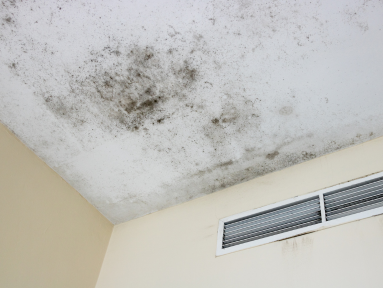
Healthcare facilities in Dubai face a different category of indoor air quality obligation than commercial buildings. The DHA and Dubai Municipality both provide IAQ frameworks that apply to licensed clinical environments; but the more pressing reason to manage mold risk proactively is patient safety, not regulatory paperwork. Patients with compromised immunity, post-operative sensitivity, or existing respiratory conditions are disproportionately affected by mold exposure in ways that do not apply to healthy adults in an office or hotel.
That distinction is well-documented. Research published in Clinical Microbiology Reviews (Denning, 1998) documented the serious complications that Aspergillus and Stachybotrys exposure can cause in immunocompromised patients; complications that would cause mild irritation or no symptoms in a healthy adult. For a clinic manager, this means that the threshold for action on mold risk is lower than it would be in a non-clinical building, and the consequences of delayed action are more serious.
Why Standard HVAC Servicing Is Not Sufficient
Most clinic maintenance programmes include periodic HVAC servicing: filter changes, coil checks, refrigerant monitoring, and mechanical inspections. These are necessary, but they do not address the internal surfaces of ductwork, fan coil casings, and condensate drain systems; the locations where mold most commonly establishes itself in clinical environments.
Clinical buildings run HVAC systems continuously, without the overnight reduction in cooling load that commercial offices typically experience. Condensate drain trays, evaporator coil surfaces, and the internal faces of fan coil casings are in sustained contact with moisture for the full operational year. Without a scheduled internal inspection and cleaning programme, these areas accumulate the conditions that support microbial growth between service visits.
The consequences of an inspection finding are not only operational. Dubai Municipality guidelines Provide IAQ expectations for healthcare environments, including indoor relative humidity maintained between 40 and 60 percent. Where an inspection identifies non-compliance, the outcome can include corrective action requirements, documentation obligations, and increased regulatory scrutiny. The facilities that avoid that outcome typically do so because they have a structured programme in place, not because they were fortunate in the timing of an inspection.
What a Proactive IAQ Programme Looks Like in Practice
The following is a practical outline of the components that form an effective mold management programme for a clinic in Dubai. This is not a compliance checklist; it is a description of what operationally sound environmental management looks like across a clinical facility.
1. Scheduled IAQ testing through a DAC-accredited laboratory
Annual testing is a common baseline for healthcare facilities in Dubai, with many operators in higher-risk zones adopting biannual cycles for procedure rooms, recovery areas, and spaces with known humidity variation. Accredited laboratory testing produces spore counts, species identification, and environmental data that reveal trends before thresholds are approached. This documentation is also the primary record a facility can present during a DHA or Dubai Municipality review.
2. Continuous environmental monitoring between formal tests
A humidity excursion caused by a blocked condensate drain or a failing fan coil unit will not appear in an annual test report; it will appear in patient air quality before anyone identifies the source. Envida’s IAQ monitoring service, using Sensgreen sensor technology, tracks humidity, CO2, VOCs, and particulates in real time across facility zones. Maintenance teams receive immediate visibility of environmental changes rather than discovering them weeks later during a scheduled visit.
3. Professional AC duct cleaning to NADCA ACR Principles
Fan coil units, condensate drain trays, and internal duct surfaces require cleaning that falls outside the scope of standard mechanical maintenance. Cleaning NADCA ACR principles addresses these areas systematically and produces documentation that can be presented during regulatory audits and post-incident reviews. For a healthcare facility, this documentation is part of the environmental stewardship record, not simply a maintenance log.
4. A documented mold response protocol
When mold is identified during a scheduled assessment or inspection, the response matters as much as the prevention. Envida’s mold remediation service follows IICRC S520 guidance, including full containment, HEPA filtration, safe material removal, and post-remediation clearance testing. Work is conducted in a way that protects adjacent patient areas throughout the process, and all stages are documented.
The Documentation That Protects a Facility
A DHA or Dubai Municipality inspection of a clinical facility will typically include a review of environmental management records. The facilities that navigate those reviews most effectively are those that can present a consistent, longitudinal record: IAQ test reports, HVAC cleaning documentation, monitoring logs, and, where relevant, remediation records.
An absence of documentation does not mean an absence of risk; it means an absence of evidence that risk has been managed. For a clinic manager, maintaining that record is not an administrative burden; it is the demonstrable output of a programme that is already protecting patients.
Envida is a NADCA and IICRC-certified indoor air quality and mold remediation company with extensive experience working in healthcare facilities across Dubai and the UAE.
Need support with indoor air quality, mold assessment, HVAC hygiene, or continuous monitoring?
📞 +971 4 361 7949
Available 24/7 across Dubai and the UAE
Frequently Asked Questions
How often should a clinic in Dubai conduct professional IAQ testing?
Annual testing is a common baseline, with biannual cycles recommended for procedure rooms, recovery areas, and zones with known humidity variation. The appropriate frequency for a specific facility should be confirmed with a qualified IAQ consultant in line with current DHA and Dubai Municipality expectations.
Which mold species are of greatest concern in a clinical environment?
Aspergillus and Stachybotrys are among the species of highest concern in healthcare settings. Both can cause serious complications for immunocompromised patients and individuals with pre-existing respiratory conditions.
What records should a healthcare facility maintain for IAQ and mold compliance?
IAQ test reports, HVAC cleaning records, monitoring logs, and mold remediation documentation. Facilities should confirm current retention requirements with their regulatory advisor, as these are subject to revision under DHA and Dubai Municipality frameworks.
Can a clinic continue operating during mold remediation?
Yes. Envida’s remediation process uses containment protocols designed for occupied clinical environments. The work is structured to protect adjacent patient areas throughout, and the scope of disruption is determined by a pre-remediation assessment rather than assumptions about the scale of work required.
What is the difference between an IAQ test and continuous IAQ monitoring?
A formal IAQ test provides a point-in-time measurement: spore counts, species identification, and environmental readings at a specific date. Continuous monitoring tracks parameters in real time, providing ongoing visibility between formal tests and alerting maintenance teams to changes as they occur rather than after the fact.
