
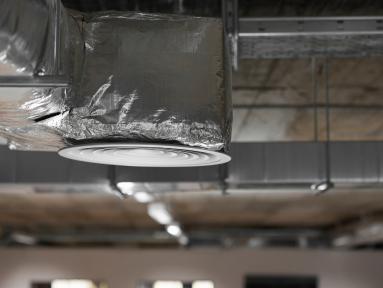
From October, cooling demand typically begins to ease, although many commercial systems continue running extensively. The pressure that kept HVAC issues visible through summer eases with it. Systems that were struggling under peak load begin holding setpoint again; complaints drop, and the condition that caused them stops being obvious. Q4 is therefore the point at which duct hygiene either gets verified or gets assumed.
This checklist is written for facilities managers and in-house engineering teams. It covers what your own team can verify without specialist equipment, where disinfection genuinely applies, what should be escalated, and what record the exercise ought to leave behind. It is intended to support your existing maintenance regime rather than to replace a contractor inspection.
The obligation sits with the building owner
ANSI/ASHRAE/ACCA Standard 180 establishes minimum inspection and maintenance requirements for commercial HVAC systems, aimed at preserving thermal comfort, energy efficiency, and indoor air quality. It is built around a documented maintenance programme rather than reactive servicing.
The practical implication for facilities teams is that the programme, and the records evidencing it, sit with the building owner or operator rather than with whoever performs the work. That reframes a hygiene checklist. It is not a task list for a contractor. It is the evidence the building holds that its system is being maintained to a defined standard.
The Q4 verification checklist
Filters. Confirm media is within rated life, seated correctly, and that gaskets seal. Look for bypass at the frame edges, which is visible as dust streaking on the clean side. Record differential pressure if the system reports it.
Condensate drainage. EPA guidance on commercial buildings is direct on this point: drip pans should be clean, unobstructed, and draining properly. Check falls, flush lines, and look for standing water. In our experience across UAE facilities, inadequate condensate drainage after an extended cooling season is among the most frequently identified contributors to biological growth.
Coil faces. Visual check for fouling and for matted fins. Note any rise in pressure differentials against earlier readings; the trend matters more than the absolute value.
Supply grilles and diffusers. Staining or dust deposition around vents indicates carriage from upstream, not a dirty grille. Cleaning the grille removes the symptom. If AC vent cleaning in Dubai properties is being requested repeatedly for the same zones, the cause sits further back in the system.
AHU and FCU interiors. Access panel seals intact, internal insulation sound and not shedding, no visible growth on casing surfaces.
Fresh air intakes. Screens clear, no obstruction, no proximity to exhaust discharge or ground-level contamination sources.
Humidity records. Review shoulder season logs. Cooling load falls before outdoor humidity does, so this is the period where indoor relative humidity tends to drift upward unnoticed.
Where disinfection applies, and where it does not
AC duct disinfection in Dubai is frequently sold as a routine annual service. It is more usefully understood as a defined step that follows mechanical cleaning where microbial contamination has been confirmed.
Applying an antimicrobial to a system that has not been mechanically cleaned treats the surface of a deposit rather than the deposit itself. AC disinfection in Dubai carried out on that basis produces a certificate and very little change in system condition. Where growth has been confirmed and source removal completed, treatment of coil blocks, drain pans, and downstream surfaces is appropriate and should be recorded against the specific components treated.
What to escalate
Internal duct survey, microbial sampling, and any confirmed growth all need specialist involvement. Our guidance on end-of-summer duct inspection sets out what that scope should record, and our article on what maintenance contracts typically exclude explains why ductwork often falls outside routine servicing.
Where facility maintenance duct cleaning in the UAE is contracted out, the same records should be requested from the provider rather than assumed.
Keep the output. A dated record of what was verified, by whom, with photographs and readings, is what turns routine hygiene activity into a defensible maintenance record.
Discuss a Q4 HVAC hygiene review for your facility.
Envida Environmental is a NADCA and IICRC-certified provider of commercial HVAC cleaning services and specialized cleaning services in Dubai, supporting facilities teams across commercial, hospitality, healthcare, education, and industrial properties in the UAE.
📞 +971 4 361 7949
📧 admin@envida.ae
Available 24/7 across Dubai and the UAE
Frequently Asked Questions
How often should this checklist be run?
In our experience across UAE facilities, a quarterly internal review works for most commercial buildings, with the Q4 check after peak cooling. Higher-risk environments warrant shorter intervals.
Can our in-house team do this without specialist equipment?
Most of it, yes. Filters, drainage, grilles, intakes, and access panel condition need no specialist tools. Internal duct survey and sampling do.
Is annual AC duct disinfection necessary?
Not as a routine default. Disinfection follows confirmed contamination and mechanical cleaning. Applied to an uncleaned system, it treats the surface of a deposit rather than removing it.
Does HVAC cleaning in Dubai have a required frequency?
NADCA ACR sets intervals by building use rather than a fixed period. Local dust conditions, system use, and extended cooling periods should also inform the interval chosen.
What documentation should a hygiene review produce?
Dated records of what was checked, readings taken, photographs of component condition, and any actions raised. Standard 180 expects a documented programme, not informal practice.
Our system holds setpoint fine. Is hygiene still relevant?
Yes. Thermal performance and hygiene are separate conditions. A system can deliver design temperature while distributing particulate or microbial contamination from its interior surfaces.
