
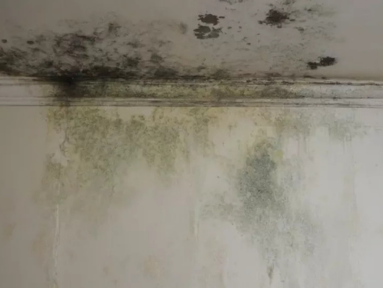
Mold is rarely the first item on a facility manager’s agenda until it becomes an urgent one. In Dubai and across the UAE, the combination of extreme summer humidity, heavily sealed building envelopes, and near-constant air conditioning creates conditions that accelerate mold growth in ways that many building professionals underestimate. By the time mold becomes visible, the costs financial, operational, and reputational are already compounding.
This article examines what mold actually costs large facilities in Dubai, why delays make the problem exponentially worse, and what proactive management looks like in practice.
Why Dubai’s Built Environment is Particularly Vulnerable
Dubai’s climate presents a genuinely difficult set of conditions for building operators. Outdoor relative humidity regularly exceeds 85–90% during summer months, and the extreme differential between outdoor temperatures and heavily air-conditioned interiors creates persistent condensation risks on cold surfaces, within ductwork, and inside wall cavities.
Modern commercial construction in the UAE, characterised by gypsum board partitions, suspended ceilings, and extensive ductwork, provides ample organic material for mold colonisation once moisture is introduced. Unlike older buildings that “breathe” through natural air infiltration, tightly sealed contemporary buildings trap moisture with nowhere to go.
The result is that leaks, condensation, and humidity excursion events that might cause limited mold growth in a well-ventilated older building can generate significant contamination within 24 to 48 hours in a modern Dubai facility. Hospitals, schools, and high-occupancy commercial buildings are especially exposed because they operate continuously, have complex HVAC systems, and face strict regulatory requirements for indoor environmental quality.
The Real Health Consequences for Building Occupants
The World Health Organization (WHO) and U.S. EPA both recognise indoor mold exposure as a significant public health concern. In practice, the health impacts seen in affected facilities include:
Respiratory and allergic symptoms, mold spores, and the microbial volatile organic compounds (MVOCs) they produce are a well-established trigger for asthma, allergic rhinitis, eye irritation, and coughing. Children and immunocompromised individuals, the two populations most commonly found in Dubai’s hospitals and schools, are disproportionately affected.
Increased absenteeism, sustained exposure to poor indoor air quality, is associated with elevated rates of sick leave among staff and, in school environments, with reduced attendance and concentration among students. The EPA’s report on indoor air quality in schools identifies mold as one of the primary contributors to unhealthy learning environments.
Healthcare-associated complications — in hospital settings, mold is a particular concern for immunocompromised patients. Certain mold species, including Aspergillus and Stachybotrys, pose serious infection risks in clinical environments. The CDC guidelines on environmental infection control in healthcare facilities outline specific requirements for fungal contamination management in hospitals.
For facilities in Dubai, these health impacts carry direct operational consequences and regulatory ones. The Dubai Health Authority (DHA) and Dubai Municipality maintain environmental health standards for healthcare and public facilities. Documented evidence of mold-related health incidents can trigger inspections, penalties, and licence conditions that impose significant operational disruption.
The Financial Cost of Delayed Action
Facility operators frequently underestimate the true cost of mold because the expenses are distributed across multiple budget lines and accumulate over time. The full picture typically includes:
HVAC efficiency losses — mold colonisation inside ductwork and on evaporator coils restricts airflow and insulates heat-transfer surfaces, forcing systems to work harder to achieve the same cooling output. In Dubai’s climate, where air conditioning accounts for a substantial portion of a commercial building’s DEWA consumption, this inefficiency is directly measurable on utility bills. Regular AC duct cleaning conducted to NADCA ACR Standard restores system efficiency and is often cost-neutral when energy savings are factored in.
Structural material replacement — gypsum board, ceiling tiles, carpet underlay, and insulation are porous materials that cannot be effectively cleaned once heavily colonised. They must be safely removed and replaced. In a large facility, this is a significant capital expenditure that could have been avoided with earlier intervention.
Operational disruption — in hospitals, mold remediation in clinical areas requires careful management of infection control protocols and may necessitate temporary relocation of patients or closure of affected departments. In schools, remediation during term time is severely disruptive. The longer remediation is deferred, the larger the affected area and the greater the disruption required to address it.
Reputation and tenant confidence — mold incidents in commercial buildings become known to tenants, patients, and parents. In a competitive market like Dubai, where building quality is a differentiator, a documented mold problem affects lease renewals, occupancy rates, and institutional credibility in ways that are difficult to quantify but very real.
What Proactive Mold Management Looks Like
The most cost-effective approach to mold is preventing it from becoming an established problem in the first place. For facility managers in Dubai, this means building mold risk management into regular operations rather than treating it as an emergency-only response.
Maintain indoor humidity below 60%. The ASHRAE Standard 62.1 for ventilation in commercial buildings recommends maintaining relative humidity below 65% to inhibit mold growth. In Dubai’s climate, achieving this requires properly functioning dehumidification within the HVAC system — not just cooling.
Service HVAC systems on schedule. Blocked drain trays, fouled evaporator coils, and degraded duct insulation are among the most common moisture sources inside commercial buildings. A preventive maintenance programme that includes professional AC duct cleaning and coil inspection addresses these risks before they become colonisation events.
Deploy continuous IAQ monitoring. Envida’s IAQ monitoring and reporting service, powered by Sensgreen continuous sensor technology, tracks humidity, temperature, CO₂, VOCs, and airborne particulates in real time across multiple zones. This gives facility managers early warning of humidity excursions or air quality deterioration well before visible mold develops. Detecting a humidity spike in a mechanical room or ceiling void at 7 am is a maintenance call. Discovering mold three months later is a remediation project.
Respond to water damage immediately. Any water ingress event, a pipe burst, a roof leak, or a condensate overflow should trigger immediate drying and assessment, not a maintenance ticket for the following week. The 24–48 hour window before mold colonisation begins is narrow. Envida’s mold remediation team is available to assess moisture events and intervene before growth is established.
Test, don’t guess. When mold is suspected, either from visible signs, occupant complaints, or elevated humidity readings, professional IAQ testing and verification provide an accurate picture of airborne spore counts, affected species, and the extent of hidden contamination. This is the foundation of an effective remediation plan and the benchmark against which post-remediation clearance is measured.
Choosing the Right Remediation Partner
Not all remediation companies operating in Dubai are equal. For hospitals, schools, and commercial facilities where health and regulatory compliance are at stake, NADCA and IICRC-certified providers are the appropriate standard. Certification requires demonstrated technical competence, adherence to published remediation protocols (including IICRC S520), and ongoing professional development providing both quality assurance and an audit trail for regulatory purposes.
Envida is a NADCA and IICRC-certified indoor air quality and remediation company with extensive experience in complex, occupied facilities across Dubai and the UAE. Our services are designed to meet the specific demands of healthcare, education, and commercial environments where downtime is limited and compliance is non-negotiable.
👉 Request a facility assessment or get a quote from our certified team today.
