
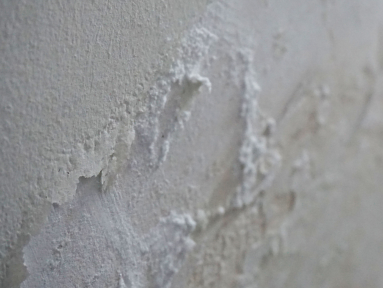
Mold enquiries across UAE commercial properties rise sharply at the end of the cooling season, and in many of those cases the affected area was treated within the previous twelve months. The visible growth was removed, the surface was cleaned, and it returned to the same location or an adjacent one.
This article is for facilities managers, engineering managers, and building operators dealing with recurring mold rather than a first occurrence. It covers what changes inside a building as summer ends, why HVAC design determines where mold reappears, and what a root cause investigation involves. It is intended to support better-scoped specifications, not to replace a site’s assessment.
The end of summer changes the moisture balance, not the moisture load
During peak summer, air conditioning in UAE buildings runs close to continuously. Dehumidification is a by-product of that operation; as air passes across a cold coil, moisture condenses out and drains away. The system manages humidity even though nobody specified it as an objective.
From late August into October, outdoor temperature falls before outdoor humidity does. Coastal properties in particular continue to see high absolute moisture in the outside air while cooling demand drops. Compressors run shorter cycles; coils spend less time below dew point, and latent moisture removal falls. Indoor relative humidity rises even as the building feels more comfortable.
The US EPA advises maintaining indoor relative humidity below 60 percent, ideally between 30 and 50 percent, to prevent mold development. The same guidance notes that wet building materials should be dried within 24 to 48 hours to avoid colonisation. In practice, most recurrence cases we assess involve conditions that sat above that threshold for weeks, not a single water event.
HVAC design determines where mold returns
The mold does not reappear randomly. It reappears where the building’s mechanical design concentrates moisture and where organic material has accumulated. The locations that recur most consistently are condensate drain trays with restricted drainage, fan coil unit casings and internal insulation, porous duct liner downstream of the coil, and ceiling voids where supply ducting passes through unconditioned space. Oversized cooling equipment contributes as well; a unit sized for peak load short-cycles at shoulder-season load, satisfying temperature quickly while removing very little moisture.
Ductwork then distributes the outcome. In centrally ducted systems with shared return air paths, spores and microbial volatile organic compounds move between zones, so growth identified in one room frequently originates in plant serving several. This is why a HVAC mold inspection covering internal duct and FCU condition produces different findings from a visual room survey, and why our guidance on hotel mold complaints and what the AC system is telling you starts inside the equipment rather than at the wall.
Why surface cleaning does not prevent recurrence
The WHO guidelines on indoor air quality: dampness and mould conclude that preventing persistent dampness and microbial growth is the most important means of avoiding adverse health effects. Mold removal that addresses the colony without addressing the conditions that produced it is a temporary outcome, and mold cleaning in Dubai is frequently specified on that basis.
IICRC S520 guidance, which Envida follows for all mold remediation in Dubai, requires that the extent and condition of contamination be established before remediation begins, and that clearance be verified afterwards. Where that sequence is reversed, the scope is set by what is visible rather than by what is present. Our guide to mold classification in commercial buildings sets out the condition categories that govern containment and verification requirements.
What a root cause investigation covers
A structured assessment for recurring mold should include:
- Relative humidity and temperature logged over a period, not a single spot reading on the day
- Moisture content readings on affected substrates, with thermal imaging where cavity moisture is suspected
- Internal inspection of fan coil units, coils, drain trays, and drain line falls
- Assessment of duct interiors and any porous lining downstream of the coil
- Review of return air paths and pressure relationships between zones
- Air and surface sampling against an outdoor reference baseline
- A written report identifying the moisture driver, not only the affected area
Where the driver is confirmed as HVAC-related, remediation should be sequenced alongside AC duct cleaning so the system is not left to recontaminate cleaned surfaces. Where the picture is unclear, IAQ testing and verification establishes a measured baseline before scope is committed.
Recurrence is a moisture and design problem before it is a cleaning problem. Buildings that treat it as the former stop paying for the same remediation twice.
Speak to Envida about a root cause mold assessment for your property.
Envida Environmental is a NADCA and IICRC-certified indoor air quality, mold removal and remediation, and HVAC hygiene company working across commercial, hospitality, healthcare, and education facilities in Dubai and the UAE.
📞 +971 4 361 7949
📧 admin@envida.ae
Available 24/7 across Dubai and the UAE
Frequently Asked Questions
Why does mold come back in the same place after professional cleaning?
Because the moisture source was never corrected. Cleaning removes the colony, not the conditions. If humidity, drainage, or a thermal bridge remains, growth re-establishes in the same location.
Is mold worse in September and October than in peak summer?
Conditions are often more sustained. Cooling load drops while outdoor humidity stays high, so systems dehumidify less while moisture supply continues. Enquiries follow that pattern, not peak temperature.
Can mold in one room originate somewhere else in the building?
Yes, where return air paths are shared. Spores and MVOCs travel through common ducting, so the affected room is not necessarily the source.
Does mold detection and removal require the system to be shut down?
Not for assessment. Remediation in occupied buildings uses containment, HEPA filtration, and controlled pressure, with affected HVAC zones isolated rather than the whole system.
How is a root cause assessment different from a mold inspection?
An inspection confirms presence and extent. A root cause assessment also identifies the moisture mechanism and sets remediation scope accordingly. Without it, scope is defined by visible growth alone.
How often should commercial buildings in the UAE be assessed?
Annually as a baseline, more often for coastal properties, healthcare sites, and buildings with a recurrence history. Confirm frequency against Dubai Municipality and, where applicable, DHA expectations.
