
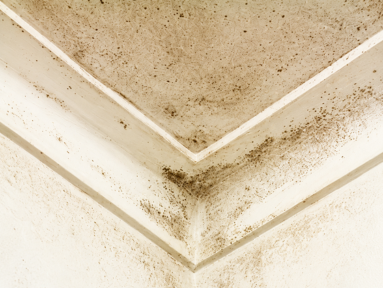
Two things converge at year-end. The effects of a full cooling season are now visible in the building, and the reporting and budget cycle is closing. Any mold work carried out earlier in the year has by now been tested by six months of peak load, and whether it held is answerable in October in a way; it was not in April.
This article is written for facilities managers, estates teams, and FM providers closing out the year. It covers the physical checks specific to mold rather than general HVAC condition, the records Dubai Municipality guidelines expect a building to hold, and how to separate a recurrence from a first occurrence before next year’s budget is set. It is intended to support your own year-end review, not to replace a site assessment.
The year-end review has two halves
The first is physical condition. The second is documentary, and it is the half most facilities teams have not assembled.
A building can be in good condition and still be unable to evidence it. At year-end, both matter: one for operational risk, the other for inspections, insurers, landlords, incoming tenants, and anyone reviewing the building’s environmental management next year.
What the records are expected to show
Dubai Municipality’s technical guidelines for indoor air quality set out expectations for what building owners keep on file. These include a description of the air conditioning system, maintenance dates with their results, details of cleaning and treatment work, and the date and nature of any remedial works.
The same guidelines frame indoor air quality inspection as a quarterly expectation, with condensate trays cleaned monthly and cooling coils and condensate pipes checked at least every six months. They also identify relative humidity above 60 percent as the condition to avoid, consistent with WHO guidance on dampness and mould.
Read together, that is a documentary standard as much as a maintenance one. The year-end question is whether you can produce the record, not only whether the work happened.
Verify that this year’s remediation held
Any area remediated earlier in the year should be re-inspected now. Post-remediation verification under IICRC S520 confirms clearance at the point works were completed. It does not speak to condition after a further cooling season, and recurrence in a treated area is a different finding from growth in a new one.
Where a previously treated area shows growth again, the moisture mechanism was not corrected. Our guidance on why mold returns after summer and on humidity imbalance across the building envelope covers the two mechanisms behind most of these cases. Scoping mold detection and removal again to the same surface will produce the same outcome.
The mold-specific checks
Distinct from general duct condition, which our Q4 duct hygiene checklist covers:
- Every area remediated in the past twelve months, re-inspected and photographed
- Condensate trays, pan condition, and drain line falls
- Perimeters of impermeable interior finishes, particularly vinyl wall covering on external walls
- Surfaces that run cold: chilled water pipework, duct exteriors in unconditioned voids, thermal bridges
- Humidity logs for the shoulder months, reviewed against the 60 percent threshold rather than averages
- Ceiling voids where supply ducting passes through unconditioned space
- Any zone with a complaint history this year, whether or not growth was found at the time
For enclosed and single-aspect spaces, office mold removal carried out without checking the adjacent void or riser frequently addresses only the visible portion.
Separating recurrence from first occurrence before budgeting
This is the distinction that matters for next year’s numbers. A first occurrence with an identified and corrected cause is a maintenance item. A recurrence in a treated area is a design or envelope item, and it belongs in capex rather than in a cleaning line.
Where the year’s findings are unclear, a commercial mold inspection with humidity logging and sampling establishes which of the two you have before the budget is committed.
Book a year-end mold assessment for your property.
Envida Environmental is a NADCA and IICRC-certified provider of mold remediation in Dubai and across the UAE. Our mold inspection service covers moisture diagnostics, humidity logging, microbial sampling, and IAQ testing and verification for commercial, hospitality, healthcare, and education facilities.
📞 +971 4 361 7949
📧 admin@envida.ae
Available 24/7 across Dubai and the UAE
Frequently Asked Questions
Why assess for mold in October rather than during summer?
The cooling season has now tested the building. Work carried out earlier in the year has been through peak load, so whether it held is answerable now.
What mold records should a commercial building hold?
Dubai Municipality guidelines point to the system description, maintenance dates and results, cleaning and treatment details, and the date and nature of any remedial works.
Our remediation passed clearance testing. Why re-inspect?
Clearance confirms the condition at completion. It does not evidence condition after a further cooling season, which is when an uncorrected moisture source becomes visible again.
How is a business mold inspection different from routine AC servicing?
Servicing addresses mechanical performance. A mold inspection assesses moisture conditions, substrate condition, and concealed growth sites, which routine servicing does not cover.
What humidity figure should we be reviewing against?
Dubai Municipality guidelines and WHO guidance both point to keeping relative humidity below 60 percent. Review time spent above it, not the monthly average.
Does a recurrence change how the work should be budgeted?
Usually, yes. A recurrence indicates an uncorrected mechanism, which is a design or envelope cost rather than a repeat cleaning cost.
